Winter Interest and Wildlife: Why Seedheads Matter
One of the most common gardening habits is the autumn clear-up. Borders are cut back, flowerheads are removed, and the garden is tidied away for winter. It can feel like the right thing to do — after all, the growing season is over.
But from a garden design perspective, cutting everything back too early is one of the quickest ways to strip your garden of structure, beauty, and seasonal interest.
Seedheads and stems are not just leftovers from summer. Left standing, they become the backbone of the winter garden.
Seedheads Create Structure When Flowers Are Gone
In summer, colour does much of the work. In winter, it’s all about form and texture.
Seedheads provide height and shape in borders at a time when most planting is low and dormant. Their silhouettes hold the space, preventing the garden from looking bare or empty. Even the simplest perennial stems can act like a framework, giving borders a sense of intention rather than absence.
This is especially valuable in mixed planting schemes, where leaving stems standing helps maintain the layered structure that makes a border feel “designed”.
Winter Beauty Is About Texture and Silhouette
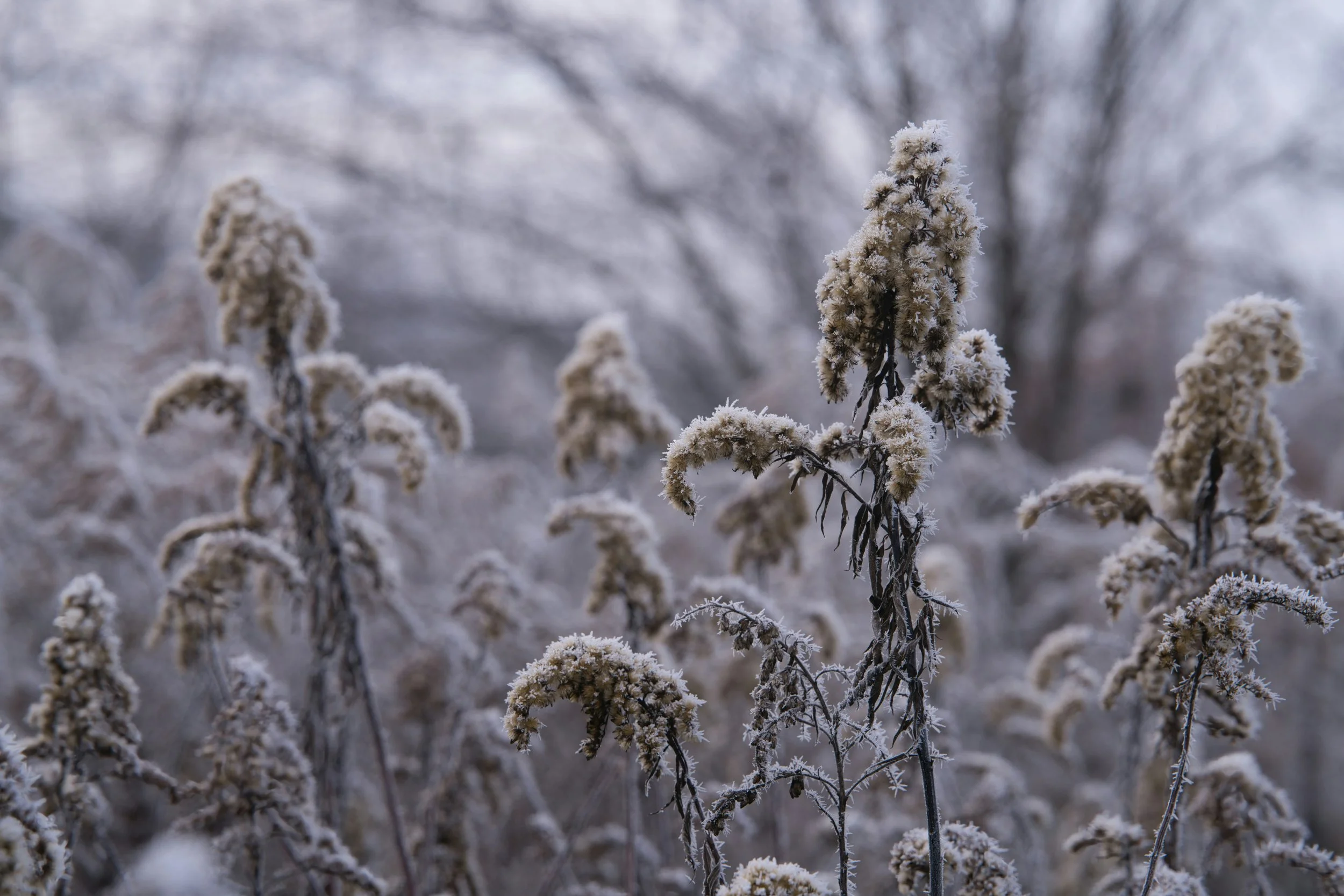
Seedheads come into their own in winter light. When the sun sits low in the sky, every stem and faded flowerhead casts longer shadows and becomes more sculptural. Frost highlights fine details, turning grasses and dried perennials into something ornamental in its own right.
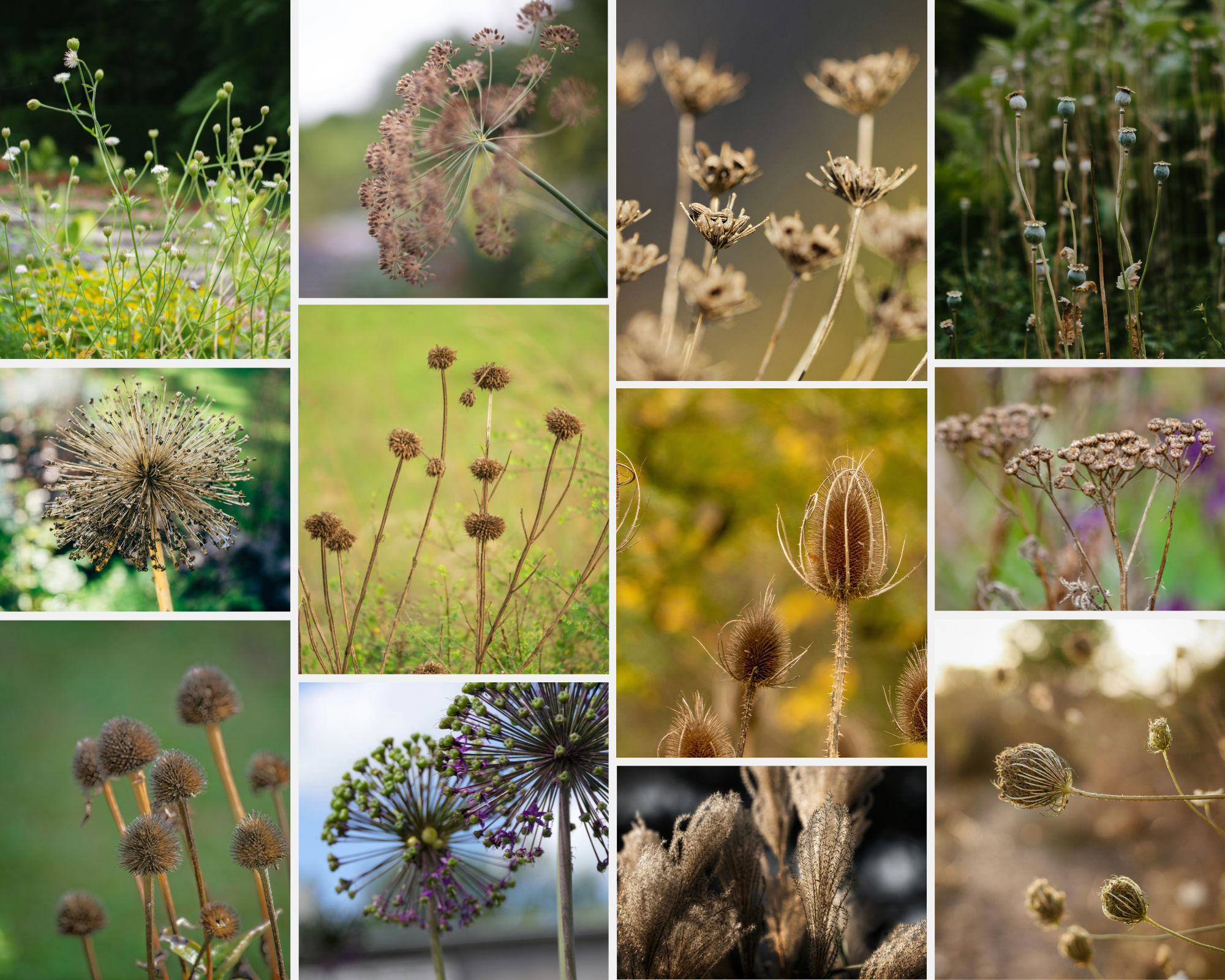
Texture becomes the star of the show: papery seedpods, spiky cones, skeletal umbels and delicate stems all contribute to a softer, more atmospheric winter garden.
Instead of a garden that disappears until spring, you get one that changes character and remains visually engaging.
A Wildlife-Friendly Garden Starts With What You Leave Alone
Leaving seedheads isn’t just an aesthetic decision — it’s also one of the simplest ways to support wildlife through the coldest months.
Many familiar garden plants provide an important food source for birds once flowering has finished. Lavender seedheads, for example, are often picked over by small songbirds during winter. Rudbeckia seedheads are another excellent source of seed, their dark cones holding food well into the colder season when natural resources are limited.
Standing stems also provide shelter. Many perennials have hollow stems, and leaving them intact creates hiding places for overwintering invertebrates. These small spaces can protect insects from frost and heavy rain, and they form part of the natural food chain that supports a healthy garden ecosystem.
Some seedhead shapes are particularly useful. Plants with broader, umbrella-like flowerheads such as Sedum (now correctly known as Hylotelephium) create dry pockets beneath their skeletal heads. These sheltered areas can offer protection for insects such as moths and ladybirds, giving them a safe place to overwinter.
A border left standing is not neglected — it’s functioning as an micro eco-system.
“But Won’t It Look Messy?”
This is the point where many gardeners hesitate. Leaving seedheads can feel like you’re letting the garden go.
The difference is simple: a garden only looks untidy when it loses its sense of intention.
Naturalistic planting can still be beautifully designed, and winter is no exception. The key is contrast. Seedheads look best when they’re balanced by a few small signs of control.
Clean edging, swept paths, clipped hedging or evergreen structure plants all act as visual anchors. They frame the wilder, softer shapes of dried perennials and grasses, allowing the planting to look deliberate rather than abandoned.
If you want your winter garden to feel designed, focus on keeping the bones of the garden neat while allowing the planting to stand.
What to Leave Standing (and What to Cut Back)
Not everything needs to stay up. The best winter borders are selective.
Plants worth leaving standing include:
Ornamental grasses such as Miscanthus and Stipa
Sedums (Hylotelephium)
Echinacea
Rudbeckia
Verbena bonariensis
Alliums
Achillea
Hydrangea flowerheads
Teasel
These hold their shape well and offer strong silhouettes.
Plants that can be cut back earlier include anything that collapses into a soggy heap, blocks paths, or is prone to disease. If it looks mushy, flattened, or unattractive after the first frosts, it’s usually safe to remove (such as Nepeta and Geraniums for example).
A good rule is to keep what stays upright and sculptural, and remove what becomes messy in the wrong way.
When Should You Cut Back?
Rather than cutting back in autumn, many gardeners now wait until late winter or early spring. This allows the garden to keep its structure through the cold months and provides shelter and food for wildlife when it’s most needed.
A simple guideline is:
When you see fresh green growth emerging at the base, it’s time to cut back.
At that point, the plant is ready to restart, and removing the old growth makes room for the new season. And with wildlife in mind, the small creatures have new foliage to hide under now the Winter stems are being cut back.
Winter Interest Without Planting Anything New
Leaving seedheads and stems standing is one of the easiest ways to improve your winter garden — and it doesn’t require redesigning borders or buying new plants.
It’s a simple shift in mindset: instead of seeing faded flowers as “finished”, you start seeing them as part of the seasonal cycle.
The result is a garden that remains textured, atmospheric and full of life through winter — not just for you, but for birds and insects too.
So this year, put a few ‘Winter Interest’ plants in your garden, and see how it improves the look of your garden over the Winter months.
Related reading
If you’d like to discuss your own garden, you’re welcome to get in touch here.