

Can AI take the job of a garden designer?
It's probably one of the most talked-about questions at the moment: can AI take your job? I've been thinking about it a lot and, if I'm honest, I've had some worrying thoughts that perhaps it could take mine.
But the more I've questioned what I do, and how I do it, the more I've come to a conclusion: no, I don't think AI can do what I do.
Don't get me wrong, AI can do some amazing things. I use it to help with administration, research, website work, marketing, aspects of social media and understanding small business laws and regulations. It's a brilliant assistant, but it still needs someone to make decisions, check its work and, most importantly, understand whether the information it produces is actually relevant.
What does a garden designer do that AI can't?
Garden design is about so much more than putting together a collection of plants and creating an attractive layout. It involves understanding a real, living space and all the things that make it unique.
It's about seeing how the sun and shade move across the garden throughout the day, how this affects the places people choose to sit and pause, and how the plants grow in different conditions. For example, a shady corner might not be the best place for a sunny afternoon seating area, but it could be perfect for a firepit or evening seating. There's little point using up a sunny spot for something that will only be used after the sun has gone down.
It's about understanding the different views from the house. What does someone look out onto while they're standing by the kitchen sink? What do they see from their favourite seat? Where do the views from the seating areas lead? And what is the first impression when someone walks through the garden gate?
It's about feeling the space, understanding its atmosphere and considering how people will use it. Having enough room to breathe between elements is important, as is giving everyone enough personal space to relax. No one likes to feel squashed or cramped. How do people naturally move around the garden? The principle of least effort is important here: people will generally choose the easiest and most natural route between places.
Then there's the soil. It's not necessarily the same across an entire garden. Some areas may be drier, others may collect water and stay damp. Some soil may contain more grit, while other areas have a higher clay content, affecting how water drains away. Understanding these differences is vital for plant selection. A plant growing in the wrong conditions is unlikely to thrive, no matter how beautiful it looked on the planting plan.
Gardens are also constantly changing with the passage of time. Materials weather, degrade and get dirty, some more than others. Trees and shrubs mature, grow larger and cast shade in places that might not have been shaded before. Existing trees can develop unexpected shapes as their branches grow in different directions. Being there in person means a designer can give practical advice on managing this growth, including when and how to prune. Sometimes, the removal of just one branch can completely transform the shape of a tree.
A garden is a living space, constantly growing and changing over time. Being able to imagine how a garden might look in 10 years or more is an important part of the design process. What will it look like compared to the day it was built? Which materials will have weathered beautifully, and which might not have stood the test of time? Which shrubs might have outgrown their space? And how will the garden have been used and maintained by the people living there? A design needs to consider not just how a garden looks on completion, but how it will develop and mature over the years.
The levels of the land also influence where elements of a garden can be placed. Working with the existing contours, rather than unnecessarily fighting against them, can make a significant difference to the budget. Unnecessary groundworks can use up money very quickly.
Existing wildlife and neighbouring farm animals are other things to consider. I've worked on gardens right next to farmland, with cows happily hanging their heads over the fence line. Needless to say, I couldn't put anything near that boundary that might be eaten or chewed! These seemingly small details can influence where different elements of a design are positioned.
And then there's the human element. Understanding the people who live there, their personalities, their wishes and sometimes even the things they don't quite put into words. When you're face to face with someone, you pick up on little subtleties in their expressions and body language. A quick flick of a hand or a change in someone's expression can tell you what they really think about an idea, even when they haven't actually said it.
A garden designer also builds relationships with trusted local suppliers, nurseries and landscapers, bringing together knowledge and practical experience to help turn an idea into a real garden.
These are all things that require more than information. They require observation, experience and judgement. This is all part of the process I follow when creating a bespoke garden design, from the initial site assessment through to the final plans.
Understanding the practical challenges
Recently, I had a design challenge involving a seating area that needed permanent shade. The difficulty was finding a way to introduce a structure that would provide shade without blocking natural light into the living room windows or spoiling the views out across the garden.
It's the sort of problem that requires you to look at the space from different angles, consider how the light moves, understand the relationship between the house and garden, and weigh up several competing requirements.
You can describe these things to AI and give it measurements, photographs and instructions. It might even suggest some interesting solutions. But it hasn't stood in that garden. It hasn't experienced the space or independently assessed how all those elements come together.
And that's a pretty significant difference.
The creative process behind a garden layout
There's also the creative side of garden design. Producing a layout takes imagination, artistic ability and a lot of time. It's not simply a case of deciding where things should go. A layout needs to be considered from so many different angles, balancing creativity with practicality, knowledge of the land and environment, and an understanding of how people will use the space.
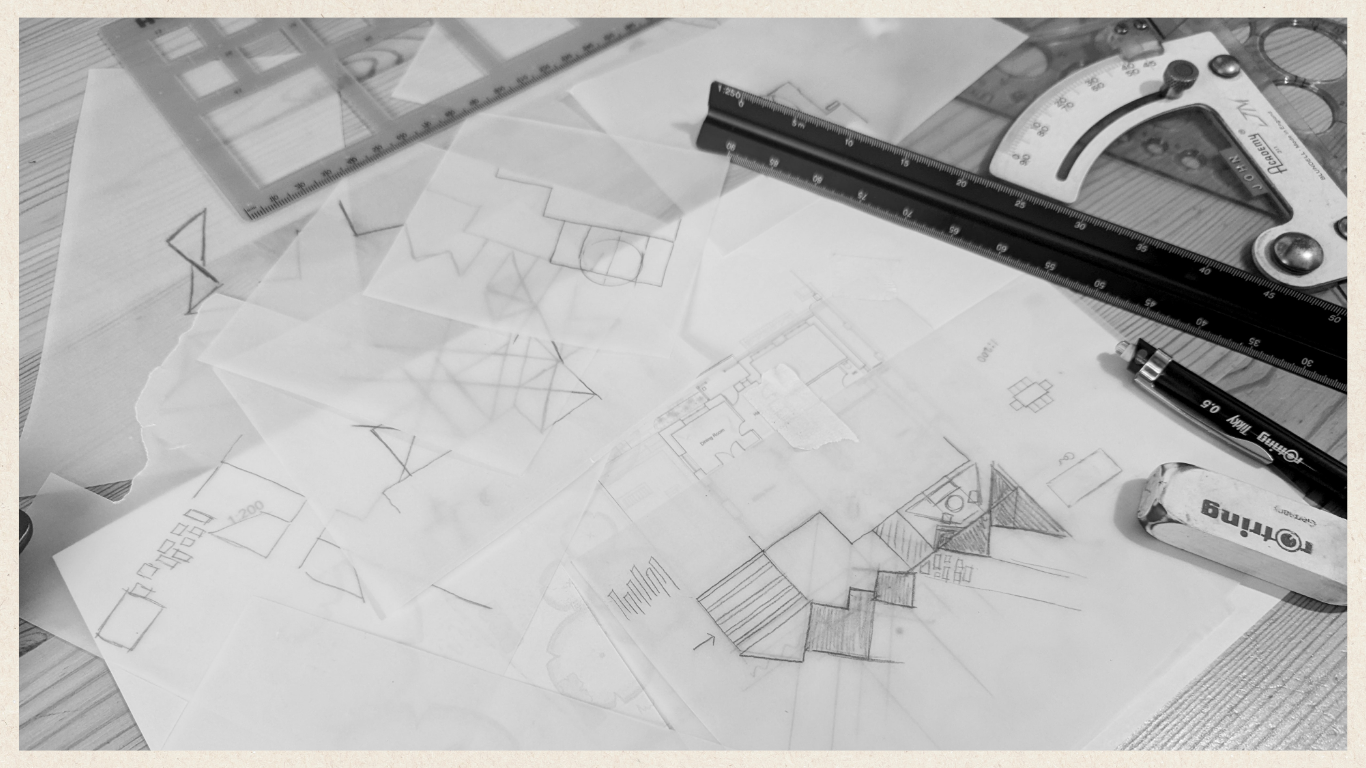
A design rarely comes together perfectly on the first attempt. I spend a long time imagining different possibilities, moving things around in my head and considering whether an idea could actually work. Once I feel I've found a layout with potential, I build a 3D computer model to explore it further, assess the proportions, identify any problems and make further adjustments.
It's an ongoing process of imagining, questioning, refining and sometimes going back to the drawing board. It takes time to arrive at a layout that not only looks beautiful, but works in every practical sense too. You can see examples of how these ideas come together in some of my garden design projects.
Why AI doesn't fully understand your garden
AI gathers and processes information from what it has been trained on and what we provide it with. It can analyse photographs, work with measurements and draw on enormous amounts of information, but it doesn't have the lived, physical experience of being in your garden.
You can give it countless details about a space, but there will always be things that are difficult to communicate through a photograph or written description.
A garden isn't just a collection of measurable things. It's an environment that you need to experience and understand.
What can AI do?
AI can create some truly beautiful garden visuals. It can produce gorgeous images, and it's easy to see why someone might fall in love with one and think, I want that to be my garden.
And that's absolutely fine! In fact, it's a great starting point.
But if you've found an image you love, I'd encourage you to take it to a garden designer and talk about how you could bring that idea into your own space.
It might not be possible to recreate the image exactly, and some elements may need to change. But that's part of the designer's job: taking your ideas and aspirations and finding a way to make them work within the reality of your existing garden.
AI is also excellent for helping with smaller, more straightforward questions. What materials could I use for my new patio? Where can I find a supplier for a hot tub? These are useful starting points, and AI can save time when researching options.
But I don't think it has a sufficiently reliable understanding of the bigger picture to bring all the different elements of a garden together into one cohesive, practical design. That's where I'd leave it to a person, drawing on their experience and understanding of the space.
Plants: knowledge takes time
This is perhaps where I feel most strongly about the limitations of AI.
The internet is a sea of information about plants. Some of it is excellent, some is vague, and some is simply incorrect. Knowing which information to trust, and understanding how a plant will actually behave in a particular garden, takes experience.
My understanding of plants comes from more than ten years of gardening in private gardens across the Chew Valley. It's been a process of learning a little more about each plant every day: its natural habitat, its growing conditions, its behaviour and even its personality!
You might not think a plant has a personality, but honestly, some plants are absolute divas. They don't like being touched, moved or, God forbid, pruned. Others are wonderfully relaxed. You can prune and hack them about without causing the slightest upset.
It takes time to understand living things.
I've read countless gardening and planting books, and while they're invaluable, they simply don't compare with what I've learnt through face-to-face, hands-on experience in gardens.
AI has access to all that written knowledge, but it hasn't spent years watching plants grow, seeing how they respond to different conditions, or discovering which combinations work beautifully together and which really don't.
I've seen AI-generated planting lists that are overly complicated and show very little understanding of how the plants will actually grow alongside one another.
A planting scheme isn't just a list of plants that individually meet certain criteria. It's about understanding their growth habits, proportions, textures, seasonal interest and how they'll interact over time.
And that understanding takes years to develop.
It's this combination of horticultural knowledge and design that underpins my approach to planting design.
So, can AI design your garden?
Can AI take the job of a garden designer?
I don't think AI can independently design a garden that responds to all the complexities, practical considerations and individual characteristics of a real space.
It simply doesn't have all the relevant information or practical experience that goes into making a garden design work.
It's brilliant as an assistant, but it needs someone with experience and understanding to question, assess and check its work.
If you're thinking about creating a new garden, get in touch with a garden designer. You can even bring along a 3D visual that you've created using AI. It could be a wonderful starting point for a conversation about what you'd like your garden to become.
If you live in the Chew Valley or North Somerset, I'd be delighted to hear from you, and help turn that visual into a real, living garden: one that works for you, suits its surroundings and thrives for years to come.