

What Is Naturalistic Planting?
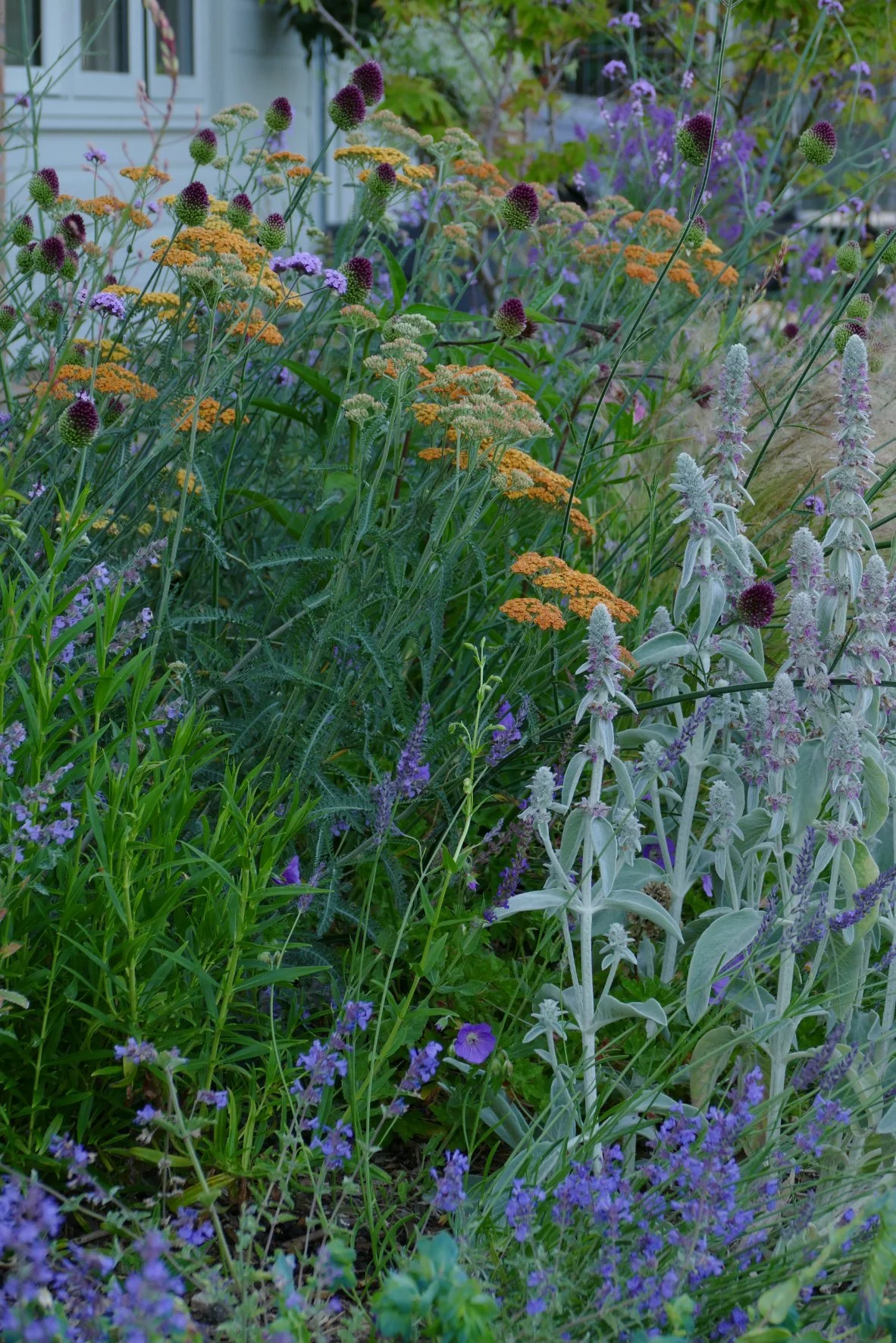
Naturalistic planting is inspired by the way plants grow together in the wild. It’s about mimicking the natural biomes we find in the environment and recreating them in our gardens — designing spaces that look wild, yet carefully managed.
In nature, plant communities are structured in layers. There are low-growing groundcovers, taller structural plants, and species that weave between them, knitting everything together. They flower at different times throughout the year, reducing competition and creating a long season of interest. Plants grow closely enough to overlap, helping to suppress weeds and naturally reduce maintenance — everyone’s favourite kind of planting.
Flowering perennials are often interwoven with ornamental grasses, adding movement, texture and a soft, meadow-like quality. The effect is fluid and atmospheric, almost ephemeral at times. When this softer style of planting is paired with bold, clean-edged hard landscaping, it creates a beautiful balance between structure and flow.
By observing how plants coexist in nature and selecting species suited to similar conditions, I design planting schemes that are resilient, long-lasting and wildlife-friendly. For sunny, dry borders I look to prairies and meadows; for shady, damp areas I take inspiration from woodlands. I choose plants that are well suited to these environments to create schemes that feel relaxed, layered and authentic.
A densely planted border offers shelter for small mammals and invertebrates throughout the growing season, while a succession of flowers provides valuable resources for pollinators. Over winter, many seed heads and ornamental grasses are left standing, creating habitat for hibernating insects and small mammals — all while remaining a joy for us to experience.
Traditional planting often leaves a lot of space between plants, allowing weeds to grow in between (and creating more work for you). If you can see the soil, weeds will grow. Plants are also frequently chosen for how they look, rather than whether they suit the conditions — which usually means more effort is needed to keep them happy.
With naturalistic planting, maintenance is kept to a minimum. There is little weeding to do during the growing season, if any, and pruning typically happens once a year at the end of February, when almost everything is cut back to ground level to make way for fresh growth.
The success of this approach lies in the design. When done well, it creates planting that feels intuitive, sustainable and deeply connected to the landscape — and it simply makes the most sense.
If you live in North Somerset, Bristol or Bath, and need help creating this sort of planting in your garden, I’d love to hear from you!