

What’s the Difference Between a Garden Designer and a Landscaper?
These days the terms garden designer and landscaper are often used interchangeably. However, they play two very different roles in creating a garden, although they frequently work closely together.
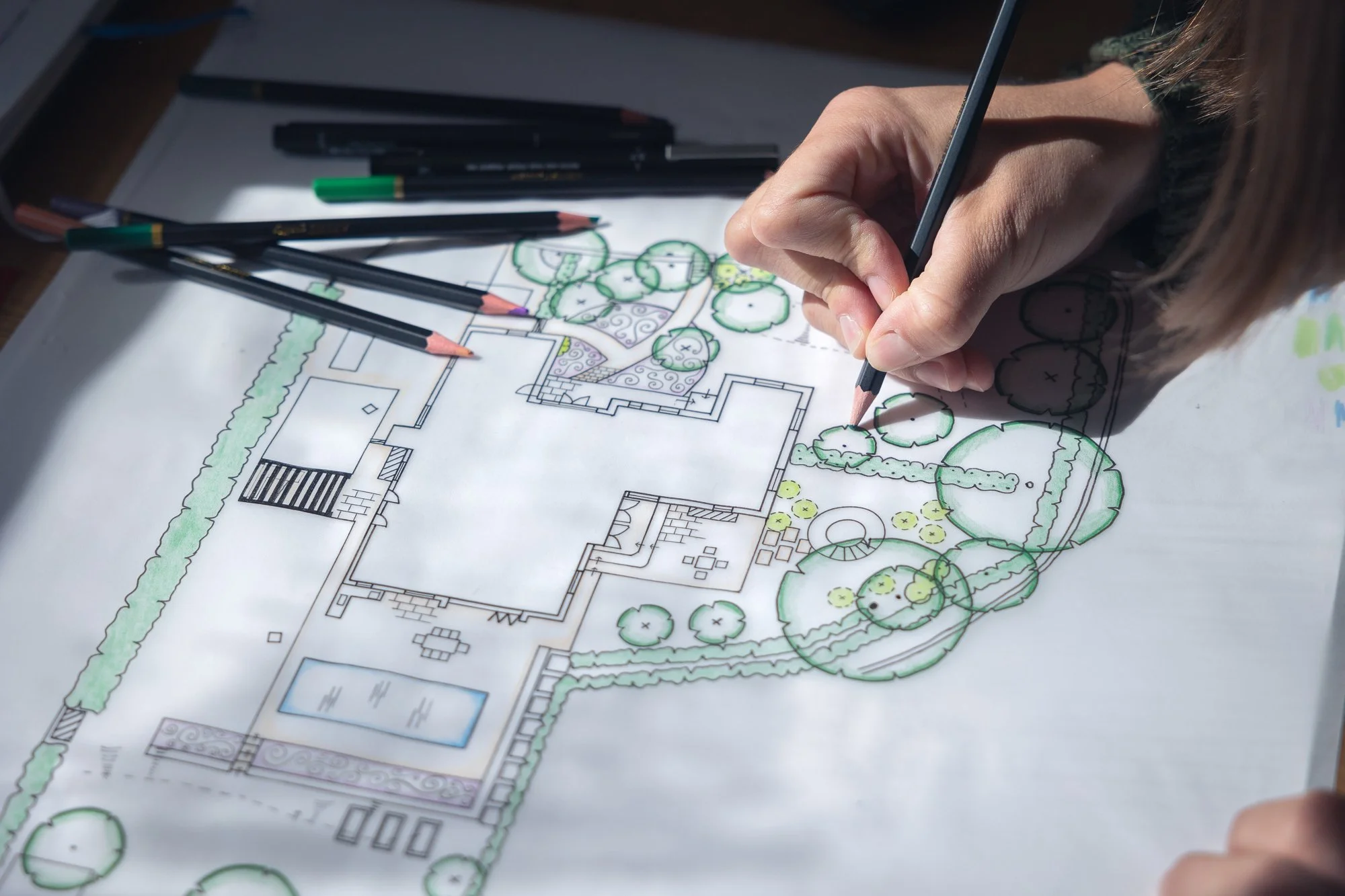
A garden designer, as the name suggests, is responsible for planning and designing the garden. Designers typically work with a range of creative and technical tools that differ from those used by landscapers. They create the vision for a garden, often developing concepts through mood boards, scaled drawings, and sometimes 3D modelling to help clients visualise the finished space.
A good designer listens carefully to the client and works closely with them to create a garden that suits their lifestyle, taste, and practical needs. Every element of the garden should be designed with the client in mind, ensuring the space feels both personal and functional.
Materials are carefully researched and selected based on suitability, durability, and sustainability. Detailed plans are produced, accurately drawn to scale and annotated with materials, specifications, and suppliers. These drawings act as a blueprint for the construction of the garden.
A garden designer should also have strong horticultural knowledge in order to choose plant species that are appropriate for the site conditions and the client’s desired level of maintenance. Planting plans are often produced showing the exact position of each plant, along with its Latin name, quantity, and its eventual height and spread as it matures.
A landscaper, on the other hand, is responsible for building the garden. They take the designer’s plans and bring them to life on site. Landscapers are highly skilled in working with materials and often have extensive knowledge of locally available products and suppliers.
They also have practical expertise in constructing the various elements of a garden, such as patios, walls, water features, and structural features. This includes understanding groundworks, drainage, and ensuring structures are safe, stable, and built to last in the local environmental conditions. A designer will know about these too, but the experience of building these elements are where the expertise lies.
Many landscapers also offer a garden design service, which can sometimes lead to confusion. In some cases this design work may be quite basic and may suit clients with simpler requirements or smaller budgets. However, not all landscapers are formally trained in design, and their horticultural knowledge may vary. This can sometimes lead to planting choices that look good initially but struggle to thrive long term.
That said, there are many excellent design-and-build landscaping teams who combine strong design skills with construction expertise. These teams are often easy to identify through the quality and detail of their previous work.
One of the key differences between a trained design team and a basic design service is the level of detail within the plans. Professional garden design typically involves careful thought, detailed drawings, and long-term planning for how the garden will develop over time.
Often, an independent garden designer and a landscaper will collaborate on a project. By working together and communicating closely with the client, they can refine the design and ensure it is built to the highest standard. The shared goal is simple: to create a beautiful, functional garden that responds both to the client’s needs and to the character of the landscape itself.
While the terms garden designer and landscaper are often used interchangeably, they represent two distinct but complementary roles. A garden designer focuses on the creative vision, detailed planning, planting design, and technical drawings required to shape a garden thoughtfully and sustainably. A landscaper brings that vision to life, using practical skills, construction expertise, and material knowledge to build the space to a high standard.
When both roles work together effectively, the result is a well-designed, structurally sound, and beautifully finished garden that is tailored to the client and the landscape.
If you want a garden that is truly tailored to you — one that reflects your lifestyle, complements your home, and stands the test of time — investing in a professional garden design is essential. This approach not only creates a more cohesive and beautiful result, but also helps avoid costly mistakes and short-lived planting choices.
If you live in Chew Valley, North Somerset, Bristol or Bath, and are ready to create a garden, take a look at my Design Portfolio.
Related reading
Feel free to get in contact below to tell me how I could help you with your garden project.